
[HKET Editorial] The 15th Five-Year Plan | How Can Hong Kong’s I&T Sector Enter the "Trillion-Dollar Track"?
Updated: Apr 30

As the drafting of the national 15th Five-Year Plan approaches, the strategic blueprint for 109 major engineering projects has begun to take shape. Among them, the "Low-Altitude Economy" (LAE) has been explicitly listed as one of the 28 core projects leading the development of "New Quality Productive Forces," becoming a new engine for high-quality development in the Greater Bay Area (GBA). Simultaneously, the annual knowledge transfer income of Hong Kong’s eight subsidized universities has exceeded HK$14 billion. While these figures are impressive, they prompt a deeper reflection within the industry: behind a sea of patents, how can Hong Kong precisely align with national strategies to achieve the leap from "research advantage" to "industrial momentum"?
Facing the tests of this era, Hong Kong’s Innovation and Technology (I&T) sector must urgently transform from a mere "policy beneficiary" into a "strategic builder and contributor." Through recent practical experiences in the low-altitude economy, we can summarize a "Hong Kong Model" that may serve as a reference.

I. Shifting from "Technical Following" to "Standard Definition" to Reshape Industrial Discourse
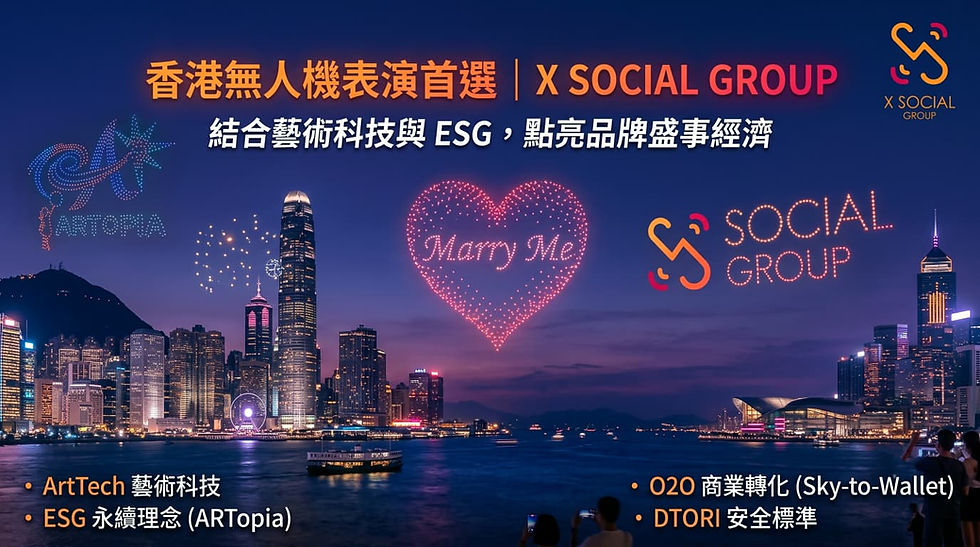
The 15th Five-Year Plan emphasizes enhancing China’s global influence in future industries. In the trillion-dollar arena of the low-altitude economy, "standard-setting power" is "market leadership." The industry-led development of the world’s first "Drone Take-off Reliability Index (DTORI)" not only fills a technical gap but has also been successfully included in the HKSAR Government’s regulatory sandbox projects.
This path of transforming "Deep Tech" into international standards leverages Hong Kong’s unique advantages under "One Country, Two Systems." It is key to helping the nation's low-altitude equipment go global and secure international discourse power. This proves that Hong Kong should not be satisfied with technical R&D alone; it must take the initiative to define the "weights and measures" of the industry.

II. Aligning "Institutional Innovation" with "Cross-Border Synergy" to Break Factor Flow Barriers
The takeoff of the low-altitude economy in the GBA is hindered not by physical technology, but by the deep alignment of rules. The industry’s active advocacy for "Shenzhen-Hong Kong Cross-Border Low-Altitude Routes" and the "GBA Mutual Recognition Mechanism for Regulatory Sandboxes" responds precisely to the national strategic requirement of deepening rule alignment and exploring the interconnection of data and spatial elements between Guangdong, Hong Kong, and Macau.
Through "Sandbox X" pilots, Hong Kong is evolving from a mere "technical testing ground" into a "source of institutional innovation." This strategy of "regulation first, pilot implementation" provides a practical roadmap for building a "full-coverage" GBA low-altitude economy community and offers valuable experience for national cross-border governance.

III. Embedding "ESG Narratives" into "Business Logic" to Broaden I&T Value Dimensions
New quality productive forces represent not only a leap in efficiency but also the evolution of "Tech for Good." The "ARTOPIA" project, co-initiated by academia and industry, ingeniously integrates drone technology with art healing and ESG (Environmental, Social, and Governance) value systems.
This demonstrates that "hard tech" can be transformed into "ESG flagship assets" with high social impact through humanistic empowerment. This model not only fits the national requirements for high-quality development but also opens a "new blue ocean" of green finance and diverse capital for Hong Kong’s I&T sector, giving technological R&D higher social value-add and international recognition.
IV. Strengthening "Demand-Driven" Conversion to Create Substantial Growth Engines
While HK$14 billion in knowledge transfer income marks the "harvest season" for research results, breaking into the trillion-dollar track requires moving away from the traditional "lab-centric" model. With the strategic consolidation of the Hong Kong Applied Science and Technology Research Institute (ASTRI) and the Nano and Advanced Materials Institute (NAMI), Hong Kong urgently needs a composite mechanism and talent pool possessing "strategic vision, industrial channels, and standard awareness."
Practical experience from chambers of commerce and industry platforms proves that only by constructing a "demand-driven" ecological pipeline—where research patents precisely target the pain points of manufacturing transformation—can a "stack of patents" be converted into substantial productivity that supports the real economy.

The 15th Five-Year Plan sets the course, and the low-altitude economy has reached a pivotal threshold. Hong Kong’s role should not be a passive waiter for policy dividends, but an active lead navigator. The current explorations in the I&T sector are a microcosm of Hong Kong responding to the call of the times and undertaking the national mission. By navigating with "Hong Kong Standards" and empowering with the "Hong Kong Model," we will surely allow the sparks of new quality productive forces to converge into a powerful force by the Victoria Harbour, writing a chapter of merit for Hong Kong within the grand blueprint of national development.
Hong Kong Economic Times Editorial By Samuel Lam Hon Yuen
Convener of the Drone Take-off Reliability Index (DTORI) Committee
CEO of X Social Group
Part-time Lecturer at Hong Kong Baptist University


Comments